In 1820, a paper was published by the Danish scientist Hans Christian Oersted, which proved for the first time the link between electricity and magnetism.
Oersted's discovery inspired two great scientists, André-Marie Ampère and Michael Faraday, to produce their greatest work.
Ampère was first to make his mark. A complete theory of electrodynamics was quickly produced, which led to Ampère being christened the 'Newton of Electricity'. Faraday's first work on electromagnetism was less successful. He discovered electromagnetic rotation in 1821, but the publication of his results was overshadowed by a row over plagiarism.
It wasn't until 1831 that Faraday was able to publish his famous account of electromagnetic induction, showing that a magnet could induce an electric current, thus laying the foundations for electricity generation.
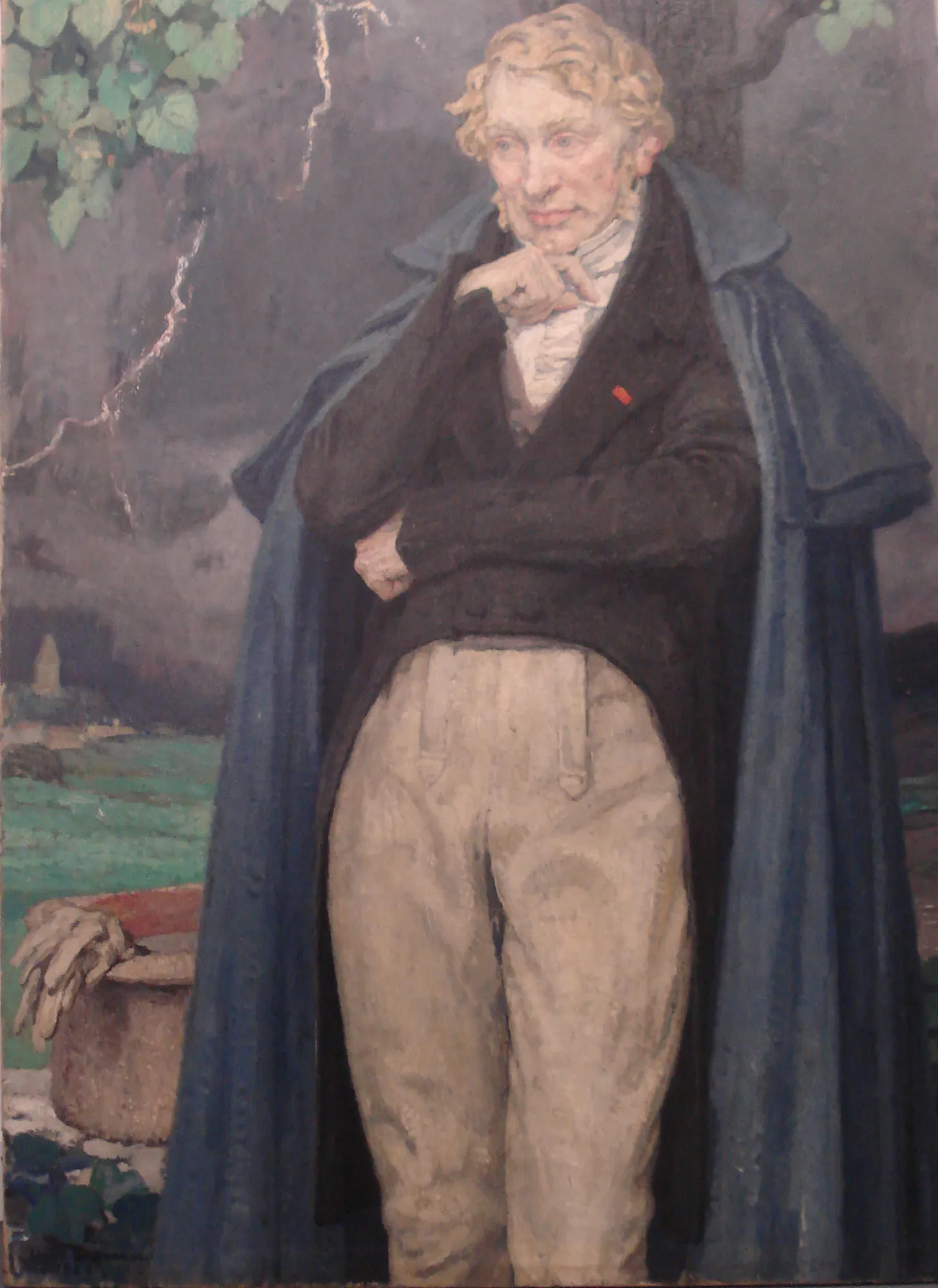
André-Marie Ampère
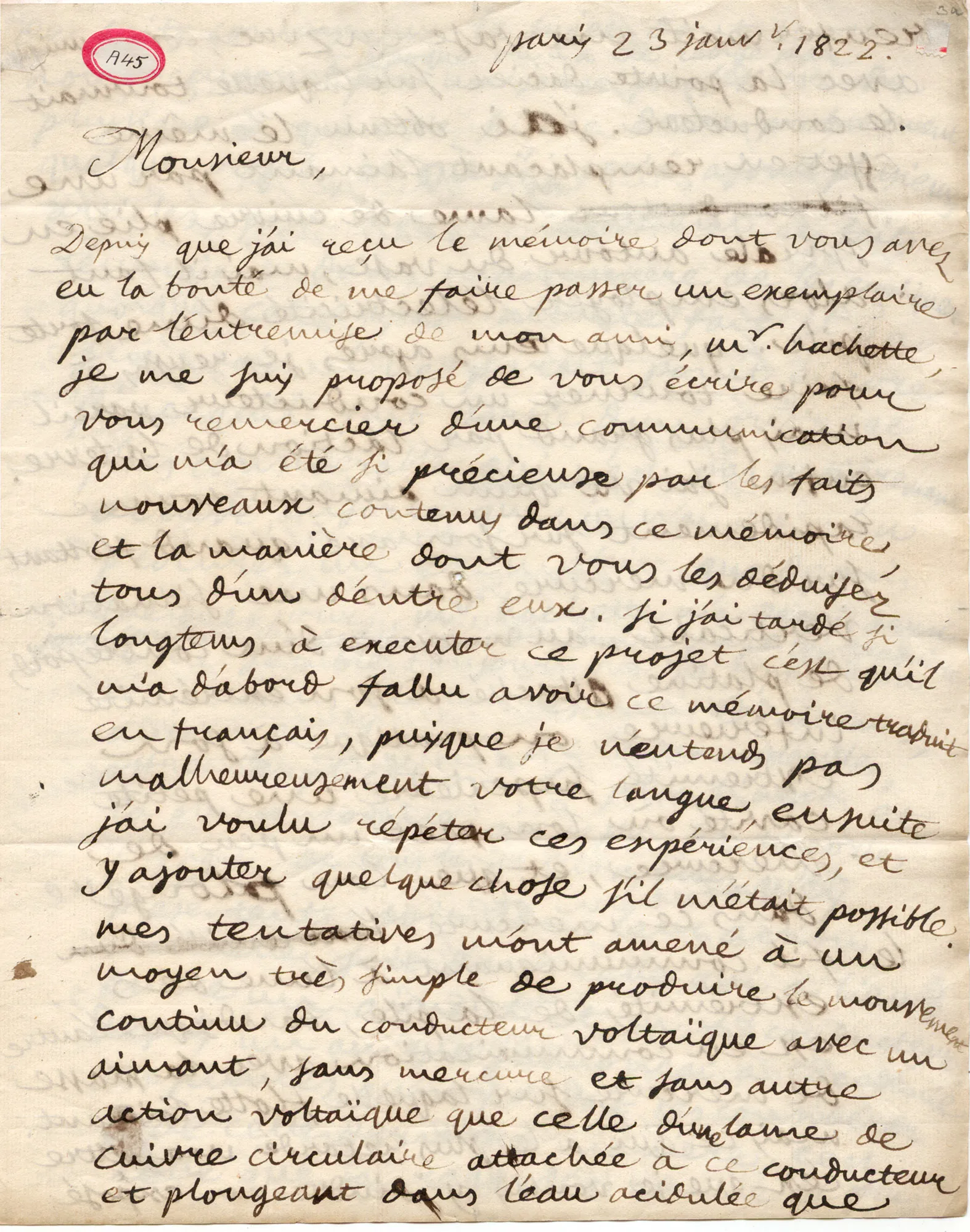
Faraday and Ampère had their disagreements over electromagnetic theory but remained friends. Many of Ampère's letters to Faraday are preserved in the Archives: this letter discusses Faraday's 1821 paper and praises his achievements while correcting some of his ideas about Ampère's theories.
Both men's achievements were recognised in 1881 when the first units of electricity were standardised: the unit of current was called the ampere (or amp) and the unit of capacitance the farad.
This and other pieces of correspondence between Ampere and Faraday can be found as part of the full collection of Michael Faraday correspondence (Ref. SC MSS 002).