


Email: ietcourses@theiet.org

ALL CAREER STAGES | UK-SPEC: A,B,E | FOUR DAYS | LIVE VIRTUAL | CPD: 42 HOURS | COST: FROM £999
Distributed generation technical training course
Practical distributed generation training for engineers, delivered live by our specialists
We can run additional and in-company courses dependent on demand. Please contact us if you're interested.
About the technical training course
The Distributed Generation course is a four-day live virtual programme split into two weeks.
The training course supports the increasing demand for engineers skilled in distributed generation.
Our leading industry experts will combine technical information with real-world case studies, helping you apply the examples to your own circumstances.
Whether you are new to the industry, want a greater understanding, or are looking for a refresher, this in-depth course has been designed to provide engineers with a practical understanding of the technical issues relating to distributed generation.
Key learning objectives
- Solid grounding in the key elements of Distributed Generation so you can ‘hit the ground running’ back at the office
- See how the theory is put into practice as you learn from leading experts in the field through practical experience in real-life industrial context and case studies
- Opportunity to ask direct questions specific to your own circumstances
- Work towards Continuing Professional Development.

Don't just take our word for it…
''The course was very descriptive, all presenters had deep knowledge regarding the subject and the topic was described precisely within the time available.''
Aker Solutions
''The course is a catch all for all relevant topics one need to be aware when embarking on the DG journey either as a beginner or as a user.''
Bechtel Ltd
''Great course and gave a great insight into connection of rotatory & convertor based generations modules on to DNO & TNO systems to form DG systems, as well as the G99, G5/5 and Grid codes, protection schemes and ANM schemes, etc.''
Navitas Engineering
''This course gave me solid technical knowledge that definitely makes my day job easier and exciting. The wealth of knowledge and experience of the trainers is exceptional. I highly recommend.''
National Grid ESO
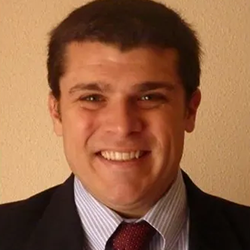
Francisco Vedreño Santos
Francisco Vedreño Santos
Lecturer in Electronic & Electrical Engineering at Edinburgh Napier University
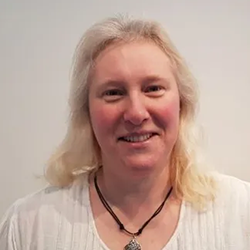
Dr Sigrid Bolik
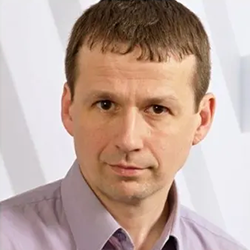
Adam Dyśko
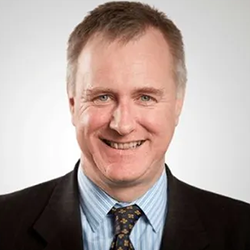
Robert MacDonald
Sebastian Neira Castillo
 |
Sebastian Neira Castillo
Lecturer in Electrical Machines and Drives, University of Edinburgh
Mike Kay
Dr Michael Merlin
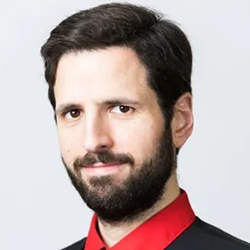 |
Dr Michael Merlin
Senior Lecturer in Integrated Power Systems, Director of MSc Electrical Power Engineering, School of Engineering, University of Edinburgh
Matthew Porter
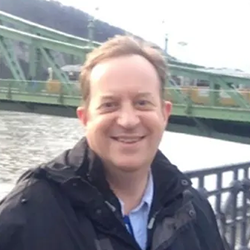 |
Matthew Porter
Managing director, PSE 2 Consulting Ltd
Paul Bancroft
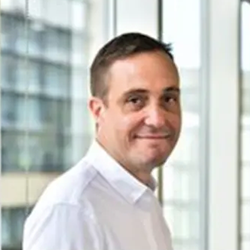 |
Paul Bancroft
Power System Consultant, Siemens
- Week one - day one
-
8.55
Teams open
9.00
Welcome
9.05
Session 1: Synchronous, induction and solar generation PART A
- Rotating field and synchronous machine equivalent circuit
- Synchronous machine basic operation and excitation control
Trainer:
Francisco José Vedreño Santos, Edinburgh Napier University, UK
10.30
Break
10.45
Session 2: Synchronous, induction and solar generation PART B
- Induction machine basic operation and excitation control
- Comparison with synchronous machines
- Solar energy generation
- Batteries and energy storage
- Applications
Trainer:
Francisco José Vedreño Santos, Edinburgh Napier University, UK
12.15
Lunch
13.15
Session 3: Interfaces for distributed generation PART 1
- Interface applications
- Basic principles of power electronics.
- Power Electronic Converter Topologies
- Widebandgap semiconductors and Future Trends
Trainers:
Stephen Finney, University of Edinburgh, UK
Michael Merlin, University of Edinburgh, UK
Sebastian Neira Castillo, University of Edinburgh, UK
14.45
Break
15.00
Introduction to workshops
Francisco José Vedreño Santos, Edinburgh Napier University, UK
16.00
End of day one
- Week two - day three
-
8.55
Teams opens
9.00
Session 7: G5/4(5) harmonics
- Brief Introduction to harmonics, their cause and effects
- Why G5/5 and when to consider harmonics
- Changes to the standard G5/4 – G5/5
- Application examples
Matthew Porter, PSE 2 Consulting
10.30
Break
10.45
Workshop two
To be confirmed
Matthew Porter, PSE 2 Consulting12.15
Lunch
13.15
Session 8: IEC60909 and G74 fault analysis
- Introduction to the standards
- Representation of network components
- Example using power system analysis software
Paul Bancroft, Siemens
14.45
Break
15.00
Workshop three: Applied Fault Analysis
- Interpret Point of Connection (PoC) Fault Level Data Provided by DNO / TSO
- Transform PoC data to equivalent Infinite Bus data / Format required for parameterising modelling software
- Assess scheme Short Circuit Ratio (SCR)
- Cover Example Hand Calcs for faults with-in a DER scheme
- Compare results with simulation software
Paul Bancroft, Siemens
16.00
End of day three
- Week one - day two
-
8.55
Teams open
9.00
Session 4: Wind turbines and wind farm technology and integration (part one)
- Technology
- Wind farm design and control
- Design challenges
- Grid Code compliance and system support
Sigrid Bolik, Siemens, UK
10.30
Break
10.45
Session 5: Wind turbines and wind farm technology and integration (part two)
- Technology
- Wind farm design and control
- Design challenges
- Grid Code compliance and system support
Sigrid Bolik, Siemens, UK
12.15
Lunch
13.15
Session 6: Grid connection – codes and regulatory requirements
This session will provide an appreciation of the key technical requirements for getting connected to the grid in Great Britain and their foundation in regulations and law.
- Grid Code, Distribution Code and G99
- Legal and regulatory background of the Codes
- Application process
- Key technical requirements of the Codes
- Earthing
- Switchgear
- Protection
- Definition of a power-generating module
- Frequency response capability
- Reactive power capability and voltage control
- Compliance, testing and simulations
- Disputes
Mike Kay, Consultant
14.45
Break
15.00
Workshop one
To be confirmedSigrid Bolik, Siemens
16.00
End of day two
- Week two - day four
-
8.55
Teams open
9.00
Session 9: Protection of distributed generation – Part one
- Protecting the generator from external faults
- Protecting the generator from internal faults
Adam Dyśko, University of Strathclyde
10.30
Break
10.45
Session 10: Protection of distributed generation – Part two
- Protecting the utility from abnormal operating conditions resulting from the presence of the generator
- Codes of practice
Adam Dyśko, University of Strathclyde
12.15
Lunch
13.15
Workshop four: Practical worked examples
- Voltage controlled IDMT protection
- Earth fault protection
- Restricted Earth Fault (REF) protection
- LOM protection (ROCOF)
- Rotor Thermal Protection
Adam Dyśko, University of Strathclyde
14.45
Break
15.00
Session 11: Case Study
Case Study: Distributed Generation: Connection Challenges and Flexibility
Robert MacDonald, Smart Grids Solutions
16.00
Chair’s closing comments
Francisco José Vedreño Santos, Edinburgh Napier University
16.15
End of day four
Please note that the programme is subject to change.
Early-bird
(until 30 September 2026)
Member - £1219
Non-member - £1529
Student/Apprentice - £999
Standard tickets
(from 1 October 2026)
Member - £1539
Non-member - £1839
Student/Apprentice - £999
Group booking discounts
10% discount for 3 to 5 delegates – DISGEN3TO5
15% discount for 6 plus delegates – DISGEN6PLUS
What's included in registration?
- Four days of interactive training delivered by Distributed Generation experts
- Access to trainer presentations
- CPD hours and a certificate.
Overseas participants
If you are attending the course from outside of the UK and are paying for your booking using a company payment card where the company is VAT Registered and is the registered card billing address, please use the registration link for a VAT registered overseas company.
This form will capture your Company VAT Registration number and will be subject to Out of Scope VAT. Otherwise, VAT is charged at the UK rate of 20%.
If you are from outside the UK but paying with a personal payment card, please use the overseas individual link.
Terms and conditions
All prices are per person. If you require a proforma invoice before booking and/or wish to pay via purchase order, please contact us: events@theiet.org. We regret that we cannot accept AMEX for online payments.
*All students must provide a copy of their student pass or letter of enrolment from their college or University.
Once registered please email your documentation to events@theiet.org along with your booking confirmation number.
Discount codes are for member and non-member delegate registration only, and not applicable to student bookings.
If you need to pay for your group by proforma invoice, please contact events@theiet.org.
Contact us