

ALL CAREER STAGES | UK-SPEC: A,B,E | TWO DAYS | ONLINE | CPD: 14 HOURS
The fundamental principles of optical transmission technical training course
From optical fibres to transmission systems and today's multi-Terabit optical networks
We can run additional and in-company courses dependent on demand. Please contact us if you're interested.
About the training course
This course provides a comprehensive introduction to modern optical transmission, tracing the path from optical fibre fundamentals through transmission system design to the multi‑Terabit optical networks deployed by today’s operators.
It bridges theory and practice, explaining not only the underlying physics of optical transmission, but also how real‑world constraints - such as installed fibre quality, cost, resilience, scalability, and operational complexity - shape the design and evolution of optical networks.
Drawing on extensive operator experience, the course covers the full end‑to‑end lifecycle of optical networks, from technology selection and system architecture through deployment, operation, upgrade, and long‑term evolution.
Key learning objectives
- Understand the fundamental properties of optical fibres ( old and new types) and their impact on transmission performance.
- Understand all of the key optical components used in modern optical transmission including lasers, modulators, detectors, receivers, optical amplifiers, wavelength multiplexers and demultiplexers.
- Explain how optical transmission systems are designed, including key trade‑offs between reach, capacity, flexibility, resilience, and cost.
- Appreciate the different types of systems including direct detection, coherent modulation, PON (Passive Optical Networks for access).
- Describe the operation and evolution of modern optical network architectures, including ROADMs and mesh networks.
- Appreciate how real installed fibre infrastructure influences system design and margin planning.
- Understand the role of flexible transceivers, wavelength grids, and software‑defined control in enabling scalable multi‑Terabit networks.
Who should attend?
This course is designed for anyone who wants a clear, system‑level understanding of modern optical transmission, from the behaviour of optical fibres to the design and operation of multi‑Terabit optical networks. It is particularly suitable for:
- Students and early‑career engineers wanting an overview of the field.
- Industry professionals wanting to gain a deeper understanding of the basics.
- Optical transmission and network engineers seeking a deeper understanding of system‑level and architectural trade‑offs.
- Product managers and technical specialists involved in optical platforms, transceivers, or network equipment.
- Policy makers, regulators, and technical strategists
 |
Andrew Lord
BT
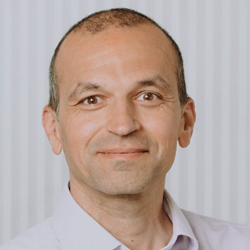
Andrew joined BT in 1985 after a BA in Physics from Oxford University. He has helped design a wide range of optical network systems and technologies, including long haul subsea and terrestrial DWDM networks. Notably he led the design and build for a govern secure optical network.
He has been responsible for optical fibre and systems specifications. He currently leads BT’s optical research including optical access, high speed optical transmission and quantum communications. He has recently initiated BT’s quantum research, with applications in areas such as secure communications, timing and sensing. He leads a large, strong research team within BT.
He sits on multiple industry advisory boards and spends significant time advising start-ups and venture capital funds. He is recognised as an industry leader, regularly speaking at conferences and sitting on several organising committees, including ECOC; he was Technical Program Chair for OFC 2015 and General Chair for OFC 2017. He was TPC co-chair of ECOC 2023.
He co-founded the UK-based TOP conference. He was a founder member of BT’s Technical Fellowship and continues to drive this exciting new initiative, designed to bring together, train and retain top technical talent in the company. He is Editor-in-Chief of Optica’s Journal of Optical Communications and Networking, He is Visiting Professor at Essex University, Fellow of both the IEEE and Optica, and elected one of the first BT Fellows in 2024.
 |
Periklis Petropoulos
University of Southampton
He manages a multidisciplinary photonics research team and collaborates extensively with colleagues across the University and the wider international research community.
He was the Principal Investigator of the EPSRC Airguide Photonics Programme Grant which advanced hollow-core fibre technologies, and directs x-band labs, an openly accessible high-speed test and measurement research facility.
He has been a principal or co-investigator in research projects worth >£33M, funded from a variety of sources, including the EU, EPSRC and the industry. His work has resulted in >650 publications in technical journals and conference proceedings, including several invited and post-deadline papers at major international conferences. He has supervised 18 PhD theses to successful completion.
Prof Petropoulos is the Editor-in-Chief of IET Optoelectronics. He has served both as member and sub-committee chair of the Technical Programme Committees for several international conferences, including the European Conference on Optical Communication (ECOC) and the Optical Fiber Communication (OFC).
He is a Fellow of Optica (formerly the Optical Society of America).
- Day 1
-
Topic Details Optical fibre fundamentals and emerging fibre types How optical fibre works; attenuation, dispersion and other limitations; hollow-core fibre (HCF), multicore fibre (MCF) and few-mode fibre (FMF). Optical components and subsystems Passive components in communication networks and optical amplification. Optical multiplexing Time vs Wavelength division multiplexing; Original DWDM and CWDM grids; the C band. Optical spectrum and multiband transmission The full fibre spectrum, including the O, S, C and L bands; applications and multiband systems. Signal modulation and the evolution of optical transmission Time and frequency representation of signals; repetition rate vs bit rate vs symbol rate; IM/DD; eye diagrams; coherent formats; constellation diagrams Evolution of coherent transmission Evolution from 10 Gbit/s to 1.6 Tbit/s; intensity and coherent modulation; QAM, polarisation, DSP-based detection and baud rates.
- Day 2
-
Topic Details Transmission system design and engineering Power budgets, system performance, Q factor, BER, FEC, engineering margin, ageing and repairs. Wavelength-division multiplexing and flexible optical systems flex-grid systems; bitrate-variable transponders; and LCoS ROADMs. Passive optical networks PON evolution: past, present and future. Optical networks and higher-layer integration IP over DWDM; protection and restoration; component-to-network reliability; and network management. Monitoring, performance and fibre sensing Optical performance monitoring, OTDR and fibre sensing. Optical transmission use cases Core networks, RAN backhaul, metro networks, inter-data centre connectivity and intra-data-centre connectivity. Future directions Energy consumption, photonic integration, optical switching and data-centre optics.
If you are attending the course from outside of the UK and are paying for your booking using a company payment card where the company is VAT Registered and is the registered card billing address, please use the registration link for a VAT registered overseas company.
This form will capture your Company VAT Registration number and will be subject to Out of Scope VAT. Otherwise, VAT is charged at the UK rate of 20%.
If you are from outside the UK but paying with a personal payment card, please use the overseas individual link.
All prices are per person. If you require a proforma invoice before booking and/or wish to pay via purchase order, please contact us: events@theiet.org. We regret that we cannot accept AMEX for online payments.
*All students must provide a copy of their student pass or letter of enrolment from their college or University.
Once registered please email your documentation to events@theiet.org along with your booking confirmation number.
Discount codes are for member and non-member delegate registration only, and not applicable to student bookings.
If you need to pay for your group by proforma invoice, please contact events@theiet.org.