
Email: ietcourses@theiet.org

ALL CAREER STAGES | UK-SPEC: A,B,E | TWO DAYS | LIVE VIRTUAL | CPD: 14 HOURS
AI for engineering: Foundations and applications training course
Making strategic, confident, informed decisions about AI adoption
Live virtual
To book this as a group in-company course contact us to discuss your requirements.
About the technical training course
This course offers a hands-on introduction to the full machine learning pipeline, giving participants a practical feel for building ML models across various applications.
Using widely recognised datasets, alongside industry-specific image and time series data, the course walks through each step from data preparation to model deployment.
Ideal for beginners or professionals exploring ML, it provides a fast-paced yet accessible overview of key concepts, tools, and workflows used in real-world machine learning projects.
Giovanna Martinez-Arellano
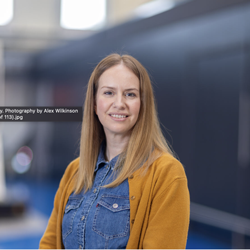 |
Giovanna Martinez-Arellano
University of Nottingham
Giovanna has a PhD in Computer Science from Nottingham Trent University and is currently an Assistant Professor in Manufacturing Systems at University of Nottingham.
Giovanna previously held an Anne McLaren Research Fellowship in Industrial AI at the Institute for Advanced Manufacturing at the University of Nottingham.
Her area of research particularly focuses on the development of robust Machine Learning models for complex and reconfigurable manufacturing systems.
Carmine Ventre
 |
Carmine Ventre,
Kings College London
Carmine Ventre is a Professor of Computer Science and Chair in Computational Finance in the Department of Informatics, King's College London. He gained a Laurea degree and a PhD in Computer Science, both from Università di Salerno.
He subsequently worked at the University of Liverpool, Teesside University and the University of Essex before joining King's in September 2019, to lead the Finance research hub in the Department of Informatics.
Between July 2023 and May 2025, he has been the director of the King's Institute for AI. From August 2024 to July 2025, he has been the Head of the Department of Informatics.
Professor Ventre’s research interests include algorithmic game theory, microeconomics and the internet, AI for algorithmic trading and finance and cryptography and security.
Key learning objectives
- Define artificial intelligence (AI) and understand its core principles and terminology.
- Understand the fundamentals of data science, including data literacy and its role in AI.
- Recognise the potential applications of AI across engineering and organisational contexts.
- Identify key benefits, challenges, and ethical considerations associated with AI adoption, including data privacy and bias.
- Develop practical skills in crafting effective prompts for chatbots and AI tools in business and problem-solving scenarios.
- Deepen understanding of machine learning concepts through hands-on exercises.
- Apply machine learning models to solve engineering problems and interpret model outputs.
- Build confidence in using AI tools and integrating AI into existing workflows and decision-making processes.
Who should attend?
This course is designed for professionals in engineering and technology who are beginning to explore AI, including systems engineers, civil engineers, electrical engineers, mechanical engineers, software developers, data analysts, and technical managers. It will also benefit graduate students, early-career researchers, and practitioners working in finance, cybersecurity, automation, and smart infrastructure who want to understand how AI can be applied in their domains.
Engineers working in data-driven environments or those transitioning into AI-related roles - such as digital transformation leads or innovation specialists - will find the course particularly valuable.
Previous attendees include Avalon Sciences, Aixtron Ltd, E.ON, ESR Technology, CBRE, Stansted Airport and National Physical Laboratory.
This is a beginner friendly course, but a basic understanding of programming will be helpful when taking this course.

Don't just take our word for it..
'The 2nd day practical sessions were an excellent and memorable complement to the 1st day's theoretical introduction.'
'The worked examples & practical sessions with Kaggle - brought the topic to life and cemented the theory with real applications.'
'Day 2 led me through the processes I needed to solidify my existing knowledge.'
- Day one
-
08.45
Registration
09.00
Welcome, objectives & use cases
Introduction to learning outcomes. Overview of 2–3 AI-in-engineering case studies.
09.30
Session 1: What is AI? Concepts and examples
Interactive lecture focusing on supervised vs unsupervised learning, simple regression/classification examples using sensor or simulation data, and large language models (LLMs) as tools in design and documentation. Cover: definition of AI, brief history, types of AI, basics of machine learning, and real-world examples.
10.15
Break
10.30
Session 2: What is AI? Concepts and examples (cont’d)
Interactive lecture focusing on supervised vs unsupervised learning, simple regression/classification examples using sensor or simulation data, and large language models (LLMs) as tools in design and documentation. Cover: definition of AI, brief history, types of AI, basics of machine learning, and real-world examples.
11.15
Activity 1: AI in your engineering workflow
Individual reflection: participants map their current design/analysis/operations workflow and identify where AI already appears or could appear.
11.30
Session 3: Group work: AI applications
Breakout groups. Each group selects one representative project and identifies 3–5 AI opportunities, noting required data and constraints.
12.00
Plenary: engineering use-case summaries
Groups report back with short summaries of their findings. Clustering of themes into categories such as design optimisation, reliability, automation, and documentation support
12.30
Lunch Break
13.30
Session 4: Introduction to Data Science
Discussion covers types of data and AI-driven data collection, basic data analysis concepts, data quality, labelling, and storage architectures that make AI models maintainable.
14.15
Session 5: Building a data-driven culture
Discussion on practices for AI-aware, data-driven decision-making.
14.45
Break
15.00
Session 6: Introduction to Prompt engineering
Using an LLM to interpret specifications, generate test cases, review calculations, and draft documentation. Demonstrate prompt patterns that specify assumptions, units, constraints, and required outputs.
15.45
Session 7: Benefits and challenges of AI in engineering
Facilitated discussion focused on key benefits and challenges.
16.00
Session 7: Ethics, safety and compliance
Data privacy, bias in datasets, explainability for safety-critical decisions, and responsibility for AI outputs.
16.15
Activity 2: "easy wins" in current projects
Participants work individually to list 1–2 low-risk, high-value AI opportunities in their live projects.
16.30
Plenary: feasibility check
Volunteers present their "easy win" ideas. Facilitator and group collectively consider data availability, tooling requirements, and change-management needs.
16.50
Session 8: Closing remarks and evaluation
Final Q&A session.
- Day two
-
8.45 Registration opens
9.00 Introductions
9.10 Session 1: Introduction to data handling using Pandas
In this session we will be introducing the key steps for preparing the data for machine learning. Methods and rules of thumb for data cleaning, data transformation, data reduction and augmentation will be covered.
10.10 Refreshment break
10.30 Session 2: Practical session in break out rooms
In this session you will be working in small groups to pre-process a data set and produce useful visualisations. A guide with key coding elements will be provided.
12.00 Lunch break
12.45 Session 3: Introduction to artificial neural networks for prediction in process monitoring
In this session, you will learn to implement a basic artificial neural network to solve an engineering application that requires the prediction of some parameter.
13.45 Refreshment break
14.00 Session 4: Practical session in break out rooms
In this session you will be working in small groups following an example for building a neural network for prediction using the Keras python library.
15.45 Refreshment break
16.00 Session 5: Image segmentation using Yolo
In this session we will introduce what image segmentation is, types and we will demonstrate how to easily implement these vision systems with very few line of code using the Ultralytics python library.
17.00 End of day
Early bird tickets
Member - To be confirmed
Non-member - To be confirmed
Student/Apprentice - To be confirmed
Standard tickets
Member - To be confirmed
Non-member - To be confirmed
Student/Apprentice - To be confirmed
Late tickets
Member - To be confirmed
Non-member - To be confirmed
Student/Apprentice - To be confirmed
Group booking discounts
AIFUND3TO5 - 10% Group Discount - 3 to 5 delegates
AIFUND6PLUS - 15% Group Discount - 6 plus delegates
What's included in registration?
- Two days of training delivered by our experts
- Access to trainer presentations
- CPD hours and certificate of attendance
- Lunch and refreshments (in person courses only)
Requirements
- Participants will need a google (gmail) account for the hands-on aspect of this course.
Terms and conditions
All prices are per person and are subject to 20% VAT. If you require a proforma invoice before booking and/or wish to pay via purchase order, please contact us: events@theiet.org. We regret that we cannot accept AMEX for online payments.
*All students must provide a copy of their student pass or letter of enrolment from their college or University.
Once registered please email your documentation to events@theiet.org along with your booking confirmation number.
Discount codes are for member and non-member delegate registration only, and not applicable to student bookings.
If you need to pay for your group by proforma invoice, please contact events@theiet.org.
Contact us